Project of the Year: Reimagining a Home Without Losing Its Soul
Some projects stand out because they look different when they’re done. Others stand out because they live differently.
This kitchen remodel does both, which is why it was recognized as MOSS’ 2025 Project of the Year. This internal award is given to projects that meet a high standard across design, execution, and overall impact.
This was not a simple renovation. It was a structural and architectural transformation inside a home with a clear point of view. The goal was to make the space work for a modern family while respecting what was already there.
A Home with Architectural Weight
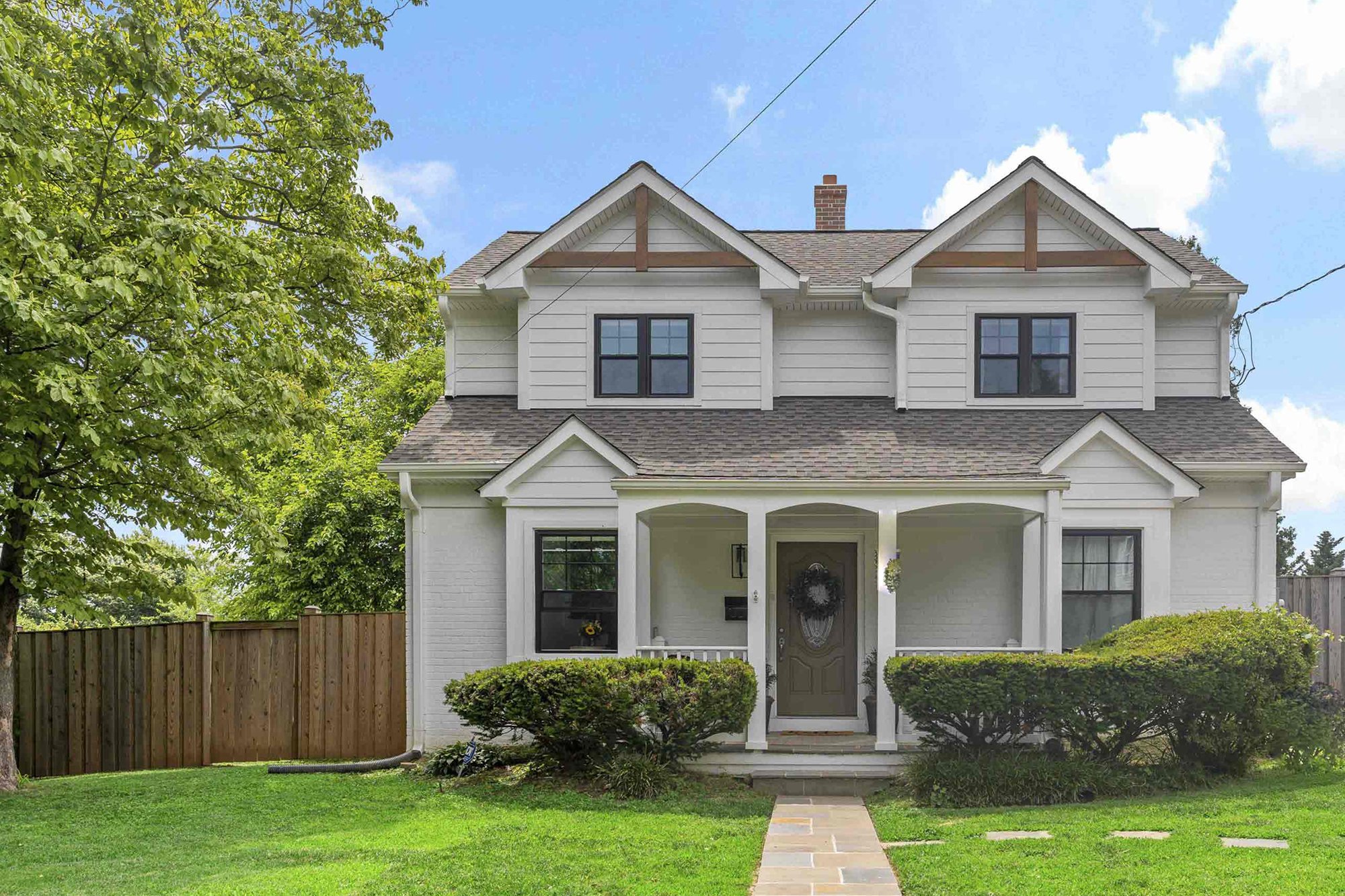
The Annandale home was originally designed by a renowned architect as his personal residence, and it shows. The Mid-Century Modern influence comes through in the millwork, proportions, and detailing that have carried through decades of changes.
It’s the kind of house where decisions feel intentional, even years later. That also meant the margin for error was smaller. Any change to the kitchen had to feel like it belonged, not just visually but in how it related to the rest of the home. As the team noted early on, this was not a blank canvas. It was a house with a clear architectural voice.

The Real Problem Wasn’t Just the Kitchen
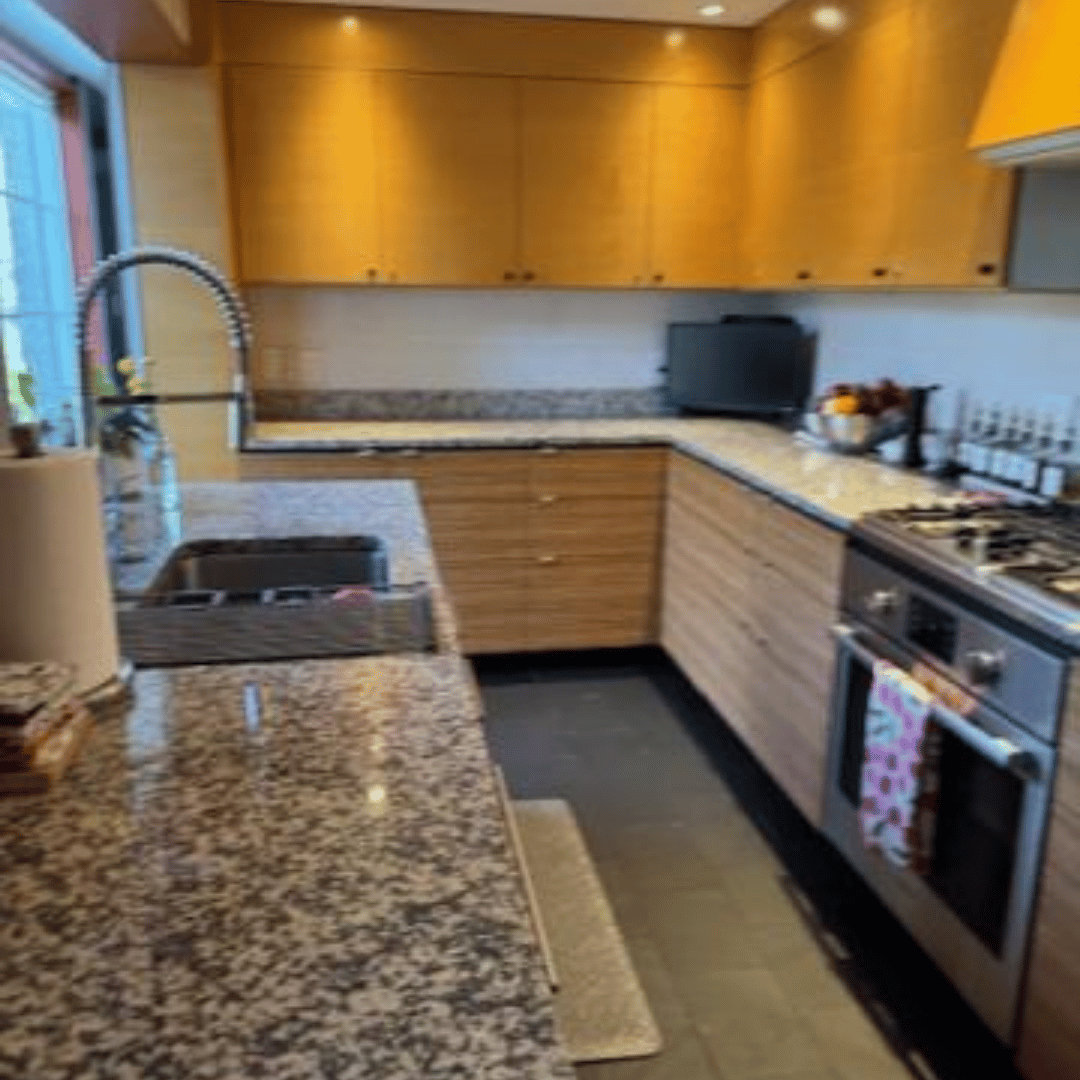
At first glance, the issue seemed straightforward. The kitchen was dark, enclosed, and disconnected. But the deeper problem was how the space functioned within the home. Over time, the kitchen and adjacent areas had become a series of separate rooms. Walls interrupted movement. Heavy finishes absorbed light. Even with large openings to the wooded exterior, that connection barely carried into the space where the family spent most of their days together.
Meanwhile, the way the home was used had evolved. This was a large, blended family with constant activity, shared meals, and frequent gatherings. The kitchen needed to support that energy without feeling crowded or fragmented.
The design problem was clear:
“Open the space to light, flow, and connection while preserving the character and sophistication already present in the home.” That balance is what made this project exceptional but also challenging.
Before Images of the Kitchen
.png)
.png)

.png)
The Strategy: Open With Purpose
Opening the space required a series of deliberate, coordinated moves.
-
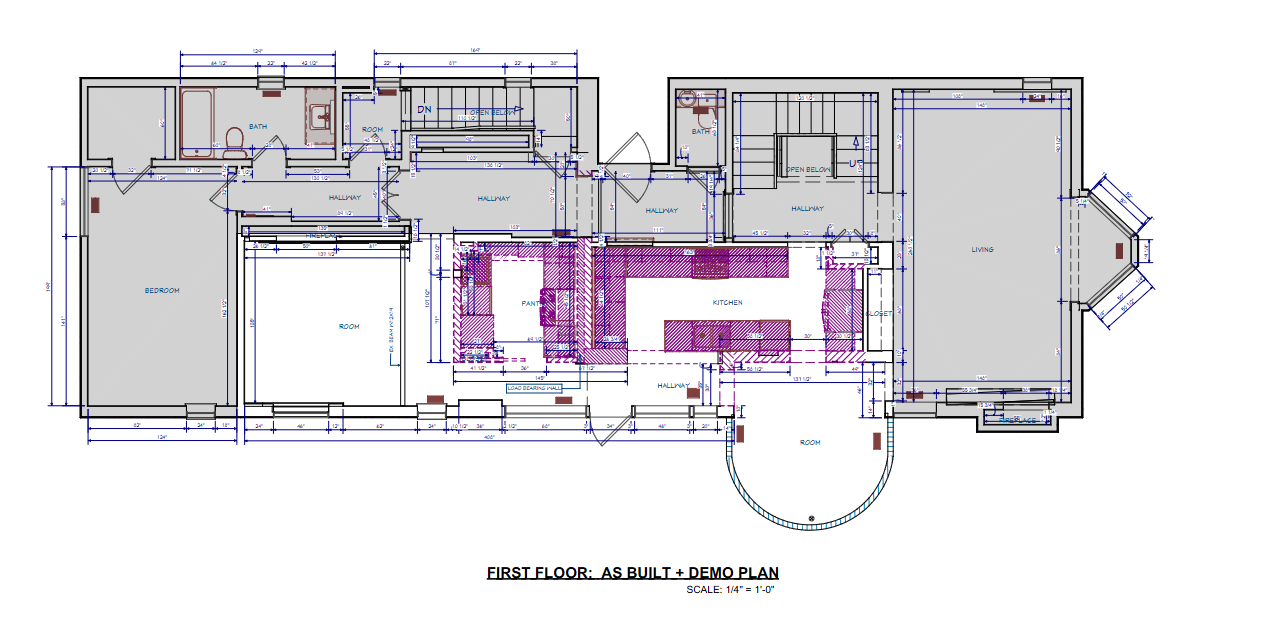
A load-bearing wall between the kitchen and dining room was removed and replaced with a structural steel beam
- The layout was reoriented to create a long, uninterrupted view line from the kitchen out to the trees beyond
- A refined material palette introduced cleaner lines while subtle Cherokee Red accents tied back to the home’s history
- High-performance appliances were integrated to support both everyday use and larger gatherings
One of the most defining moments is the exposed beam, wrapped in wood, that quietly marks where the structure was transformed. It carries the load above while reinforcing the horizontal lines that already existed in the home.
Each decision built on the same idea: create openness, but do it in a way that feels intentional.
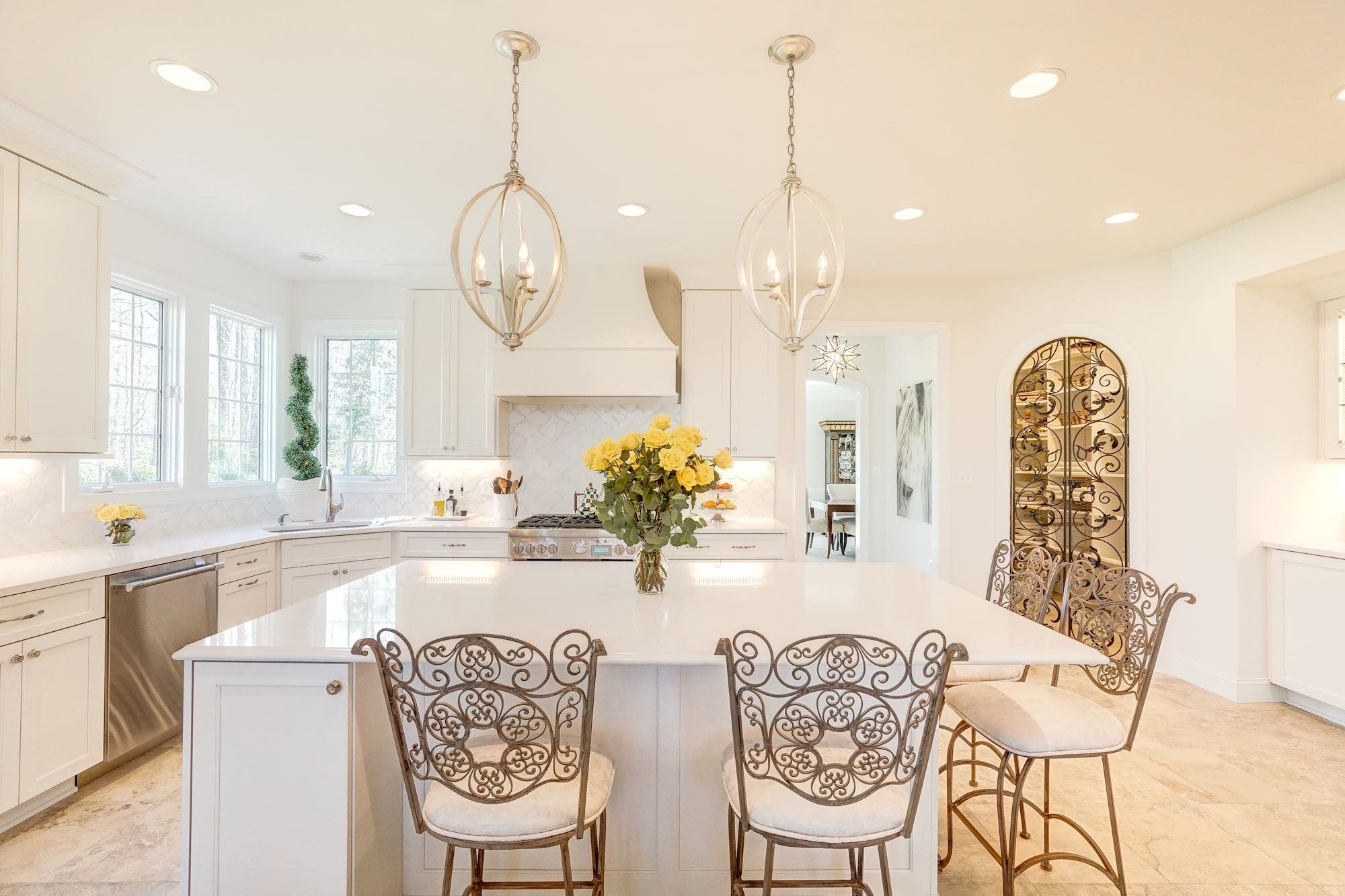
After Images of the Kitchen
The Reality of Getting There
Projects like this rarely follow a straight path. Structural conditions required additional reinforcement. Appliance delays forced adjustments mid-process. Throughout it all, the design intent had to hold. Layout, detailing, and selections were constantly evaluated to make sure the final result stayed true to the original vision, even as conditions changed.
The Result: A Space That Brings the Home Together
The transformation is immediately visible, but its real impact shows up in how the space is used every day. What was once a series of disconnected rooms is now a continuous, light-filled kitchen where sightlines extend outward and movement feels natural. Natural light reaches deep into the space, and views of the surrounding landscape are part of everyday life.
More importantly, the kitchen now supports how the family actually lives. Weekend breakfasts, homework sessions, and large family dinners all happen in one connected area. Cooking no longer feels separated from gathering, and hosting no longer requires rearranging rooms or working around the layout. The kitchen has become the place where everything naturally comes together.
This project was not about starting over, but about refining what was already there and allowing the home to function in a way that matches the life happening inside it. By opening the space, strengthening the connection to the outdoors, and making thoughtful structural changes, the home now feels intuitive, welcoming, and complete. In the end, what matters most is not just how the space looks, but how it supports the people who use it every day.