
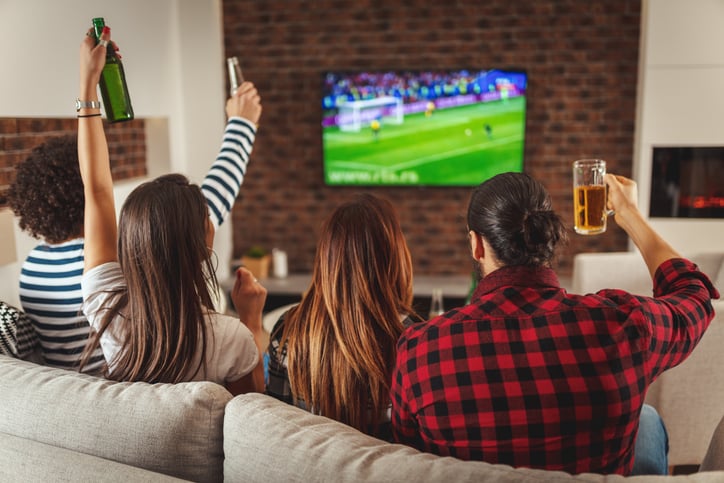
Super Bowl Sunday may be the most visible reminder of how much our homes matter when people gather—but it’s far from the only one. From playoff games and holidays to birthdays, dinner parties, and impromptu get-togethers, today’s homes are asked to host more than ever.
The difference between a house that can host and one that hosts well often comes down to decisions most homeowners wouldn’t think to make on their own. When a home is designed with entertaining in mind, get togethers feel calmer, more comfortable, and far more memorable for everyone involved.
From furniture layouts to indoor–outdoor flow, an entertainment-ready home doesn’t just feel welcoming. It works better for guests and hosts alike.
Here’s how.
Designing a Viewing Space That Works for Every Gathering
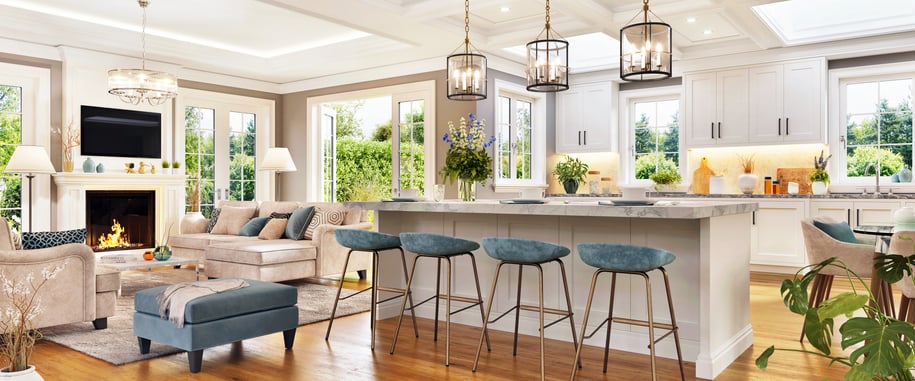
For most homes, the living room or great room becomes the default gathering space on game day, but many weren’t designed to handle a crowd. In older Northern Virginia homes especially, tight family rooms, centered fireplaces, and narrow openings can create awkward sightlines and constant bottlenecks.
This is where thoughtful remodeling (not just rearranging furniture) makes a difference.
Better sightlines start with layout, not furniture.
In many homes, the TV ends up competing with a fireplace or tucked into a corner because the room was never designed for media. During a remodel, MOSS often evaluates whether relocating a fireplace, redesigning built-ins, or creating a dedicated media wall would allow the screen to anchor the room naturally. The result: seating that faces the action without blocking walkways or feeling forced.
Seating solutions that maximize space.
In tighter Arlington family rooms, built-in banquettes or custom window seating can dramatically increase seating without crowding the floor. These built-ins often include hidden storage for blankets, games, or extra cushions—details that make hosting easier without adding visual clutter.
Open flow keeps people moving without disrupting the event.
Homes designed for entertaining separate circulation paths from seating areas. Widened cased openings between the kitchen and family room, reworked hallway connections, or repositioned doorways allow guests to grab food and drinks without cutting directly through the viewing zone.
Lighting that supports the screen and the room.
A remodel allows for layered lighting plans: recessed fixtures on dimmers, wall sconces placed outside the TV’s glare zone, and indirect lighting that keeps the room comfortable without washing out the screen. Thoughtful window placement and treatments can also control late-afternoon sun, which is something furniture alone can’t fix.
When these elements are designed into the space, hosting feels planned rather than improvised. The room works just as well for a packed game day as it does for movie nights, holidays, and everyday family time.
Make the Kitchen a Team Player
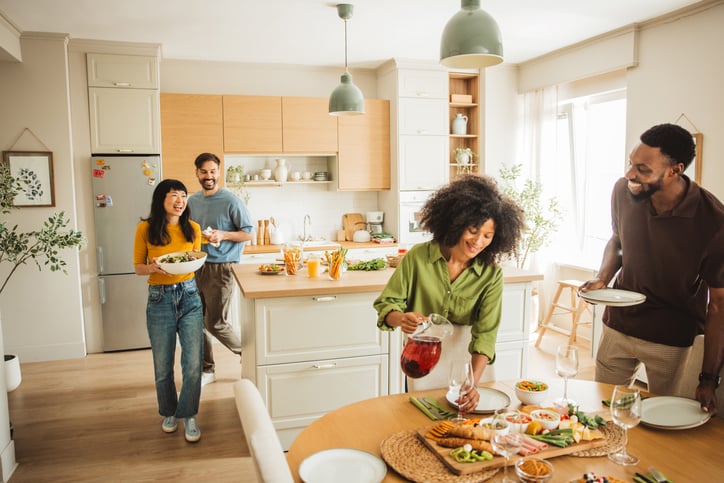
Even when the game is on in the living room, the kitchen is where entertaining truly unfolds. It’s where food is prepared, drinks are filled, and conversations naturally gather. When a kitchen isn’t designed with hosting in mind, the result is crowding, clutter, and a host who feels cutoff from the action.
When homeowners tell us they love to entertain, MOSS helps them look beyond finishes and appliances to focus on how the kitchen actually performs during real gatherings.
Design sightlines that keep you connected.
Open layouts where the kitchen overlooks the living or dining space allow hosts to prep, pour, and participate at the same time. During remodel planning, this often means removing or reworking walls, adjusting island orientation, or relocating appliances so the cook isn’t turned away from guests.
Plan islands and serving zones for traffic.
For entertaining households, islands work best when they’re designed with dual purpose: prep on one side, serving or self-serve on the other. Oversized or multi-level islands can help guests circulate without crowding the cook or blocking primary walkways—something we test during layout planning, not after cabinetry is installed.
Build in storage that supports hosting, not just daily use.
Entertaining-friendly kitchens often include concealed zones for staging food, hiding small appliances, and storing serving pieces. Walk-in pantries, beverage centers, or back-kitchen/scullery spaces allow the main kitchen to stay clean and welcoming.
Think about flow between kitchen, living space, and outdoors.
Clear circulation paths matter as much as square footage. During are model, MOSS studies how people move through the home and whether widened openings, relocated doors, or better alignment with outdoor spaces would reduce congestion during gatherings.
When entertaining is part of how you live, the kitchen shouldn’t just support cooking; it should support connection.
Use Indoor–Outdoor Flow to Expand How You Entertain
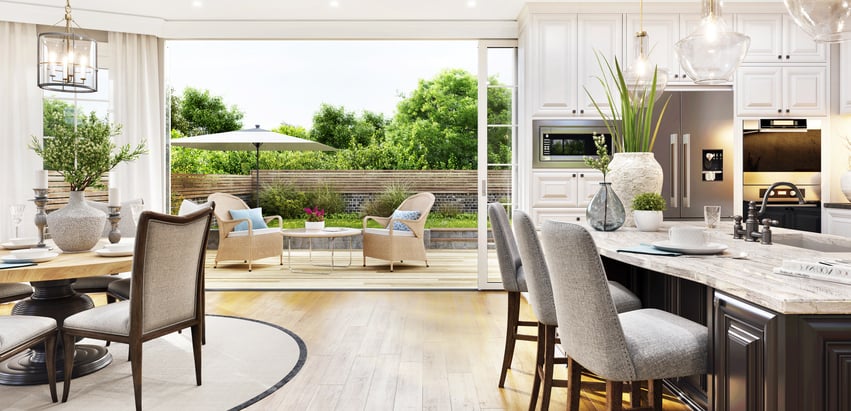
For homeowners who host often, indoor–outdoor flow is one of the most impactful upgrades. This is where remodeling decisions matter far more than temporary furniture or grills.
In many homes, the issue isn’t the size of the yard; it’s how disconnected it feels from the interior. Narrow doors, poorly placed kitchens, and unclear circulation patterns keep outdoor space underused, even when it has great potential.
Signs a remodel may be worth considering:
-
Guests bottleneck in the kitchen because there’s no easy path outside
-
Food prep and grilling feel disconnected from where people are gathering
-
Outdoor space exists, but it feels separate from the event
Design moves that support better entertaining long-term:
-
Widening or relocating doors—sliding, folding, or large hinged panels—to create a clear visual and physical connection between living spaces and the yard
-
Reworking kitchen layouts so islands or serving areas align with outdoor access, making food and drink movement intuitive
-
Adding pass-throughs, beverage stations, or outdoor-adjacent storage to reduce traffic through the main kitchen
-
Planning outlet placement early for outdoor heaters, TVs, speakers, and lighting—details that are far easier to integrate during a remodel than after
-
Designing decks, screened porches, or covered patios as true extensions of the living space, sized and positioned for real use
These changes don’t just help for one event. They reshape how the home functions every time you host.
Think Beyond the Big Screen
While the TV may be the focal point, memorable gatherings offer guests options.
- Secondary zones: Bonus rooms, finished basements, or dining areas can be designed as overflow spaces for conversation, games, or alternative viewing. During remodels, MOSS often plans these zones intentionally rather than leaving them as afterthoughts.
- Sound and technology: Good audio matters. Planning for speaker placement, wiring, and acoustics during construction avoids visible cords
and uneven sound later.
- Food and drink staging: Sideboards, built-in buffets, or multiple snack and beverage stations help prevent crowding and keep the event moving.
These details are subtle, but they’re what keep hosting relaxed instead of stressful.
A Home That Works for You and Your Guests
Game day puts real demands on a home. Sightlines matter. Seating needs to support both conversation and viewing. Kitchens and gathering spaces have to handle traffic without feeling crowded.
Whether you’re welcoming a full house for the first time or refining a space that’s already well-loved, the right layout changes how people connect. Thoughtful circulation, purposeful gathering areas, and design choices rooted in how you actually host turn a casual Sunday into a shared experience everyone remembers.
Ready to ensure your home is the go-to entertainment house on the block? Schedule your virtual discovery session today: https://www.mossbuildinganddesign.com/contact-moss