
<img height="1" width="1" style="display:none;" alt="" src=" https://ct.pinterest.com/v3/?event=init&amp;tid=2613685073328&amp;pd[em]=<hashed_email_address>&amp;noscript=1">

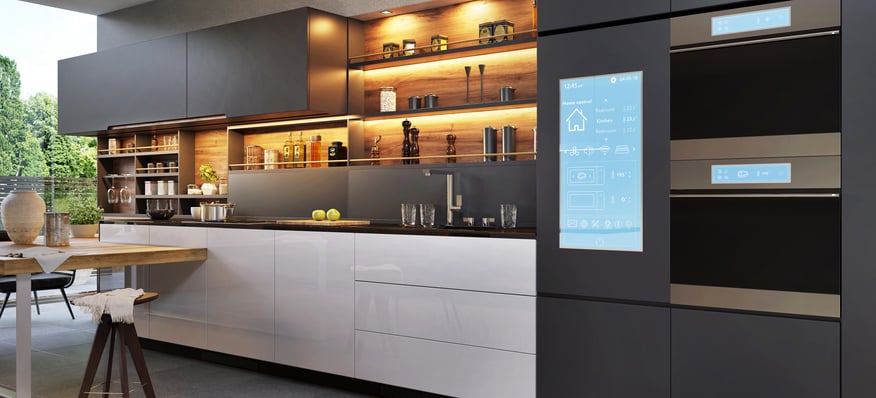
The modern kitchen has evolved far beyond a cooking space. Today, it’s where families gather, multitask, work, unwind, and reconnect — and smart appliances are helping homeowners make their kitchens more efficient, intuitive, and enjoyable. 

At MOSS Building & Design, we’re seeing a meaningful shift: homeowners aren’t just remodeling for beauty. They’re remodeling to create kitchens that support their routines, reduce daily friction, and help busy households run smoothly. 

But smart technology isn’t a universal must-have — and knowing the benefits and potential drawbacks helps you make a confident, long-term investment. 

Here’s a balanced look at the rise of smart kitchen appliances, who they’re best for, and where they truly shine in a remodel. 

What Makes an Appliance “Smart”? 

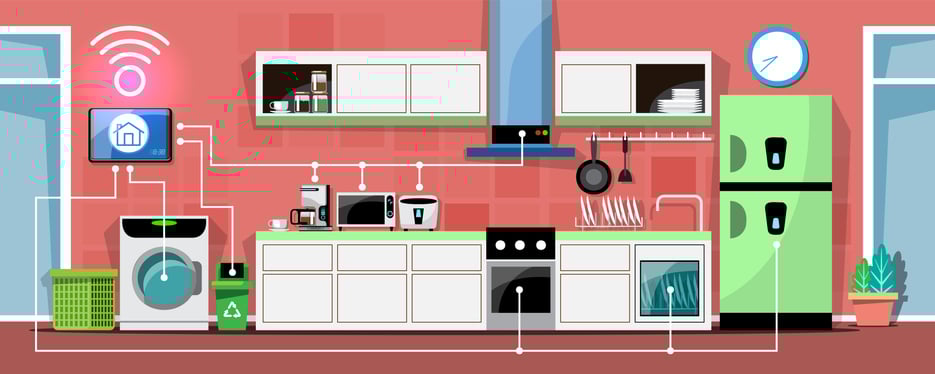
Smart appliances typically use Wi-Fi or Bluetooth to offer enhanced functionality, like: 

  • Remote control via phone or tablet 
  • Voice activation through Alexa, Google, or Siri 
  • Sensors that adjust temperature, water use, or timing 
  • Notifications and status updates 
  • Integrations with smart home systems 

These features are designed to save time, support busy families, and create a more intuitive kitchen — but they also come with considerations like app setup, connectivity needs, and long-term tech maintenance (more on that below). 
iStock-1409419041

Smart Kitchen Trends Homeowners Are Loving

1. Connected Ovens & Ranges

Preheat from your phone. Get alerts when dinner is done. Adjust settings without stopping the conversation. 

Advanced models offer: 

  • Built-in cameras for monitoring food 
  • Automatic cooking programs 
  • Voice-activated timers and temperature changes 

Best for: 
✔ Busy families who juggle homework, work calls, and cooking 
✔ Holiday hosts who need precise timing 
✔ Larger kitchens in areas like Great Falls, McLean, and Fairfax where double ovens are common 

Skip if: 
✖ You rarely bake or cook large meals 
✖ You prefer simple, manual controls with minimal tech 

In many Arlington colonials — where kitchens can be compact — we often recommend a single smart oven instead of a bulky double-oven configuration. 

2. App-Enabled Refrigerators

Smart fridges today focus more on function than flashy screens. Popular features include: 

  • Internal cameras so you can check contents at the store 
  • Smart cooling zones for different food types 
  • Expiration tracking 
  • Digital grocery lists 
  • Energy monitoring 

Best for: 
✔ Larger families with busy schedules 
✔ Meal preppers 
✔ Households where the fridge is constantly in use 

Skip if: 
✖ Your fridge sits in a tight corner where smart features are harder to access 
✖ You prefer minimalist or built-in panel-ready appliances 

In open kitchens throughout Ashburn and Aldie, families love these because the organization tools make weekly planning easier. 

3. Smart Dishwashers

Quiet, efficient, and intuitive — with features like: 

  • Load sensors 
  • Auto-release drying 
  • Mobile alerts when cycles finish 
  • Voice-activated start 

Best for: 
✔ Households that run multiple cycles per week 
✔ Homeowners who want lower water and energy usage 

Skip if: 
✖ Your dishwasher niche limits the model options 
✖ You prefer manual controls with fewer electronics to maintain 

4. Touchless & Voice-Activated Faucets

These are becoming increasingly popular in both modern and multi-generational homes. 

Features include: 

  • Hands-free activation 
  • Voice-measured dispensing (“pour one cup of water”) 
  • Temperature presets 

Best for: 
✔ Households with multiple cooks 
✔ Anyone who loves to bake or prep frequently 
✔ Homes designed with accessibility in mind 

Skip if: 
✖ You have extremely hard water or existing plumbing concerns that may increase maintenance needs 

For older Arlington or Falls Church homes where space is tight, touchless faucets support workflow without adding clutter. 

5. Smart Lighting & Outlets

These upgrades create flexible ambiance and task lighting: 

  • App-controlled under-cabinet lights
  • Voice-activated dimmers 
  • Scene presets (cooking, cleaning, entertaining) 

Best for: 
✔ Any home — this is one of the easiest, most cost-effective smart upgrades 
✔ Older homes where lighting was an afterthought 

Skip if: 
✖ You prefer traditional switches or want minimal tech integration 


The Hidden Tradeoffs: What Homeowners Should Know Before Buying Smart Appliances 

To help homeowners make informed decisions, MOSS always reviews the less glamorous but very real considerations: 

1. Tech Setup & App Management

Some systems require account creation, pairing devices, and regular updates — which may be less ideal for families wanting simplicity. 

2. Wi-Fi Dependency

If your kitchen is a dead zone (common in older brick or plaster homes), smart features may underperform without upgrades. 

3. Repairs & Longevity

Smart appliances often cost more to repair due to specialty components. Technology can also age out more quickly than the appliance itself. 

4. Potential Privacy Concerns

Voice assistants, cameras, and data use raise questions for some homeowners. Choosing reputable brands matters. 

5. Increased Upfront Cost

Smart features typically add 10–30% to the appliance price, depending on the model and functionality. 


A good remodeler should help you weigh these factors — not automatically recommend the most high-tech option. 
iStock-1962677566

Smart Appliances Work Best with Smart Design 

Technology alone doesn’t make a kitchen smarter — design does. 

MOSS helps homeowners plan for: 

  • Proper electrical needs and dedicated circuits 
  • Wi-Fi reinforcement where needed
  • Appliance clearances and cabinet integrations 
  • Workflow and cooking zones for multiple chefs 
  • Future upgrades (so the cabinetry doesn’t box you in later) 

In Great Falls and McLean, where families love hosting, we often design multi-zone kitchens with double ovens and beverage centers. 

In Arlington or Alexandria, where kitchens are tighter, we prioritize smart lighting, touchless faucets, and connected single-oven layouts. 

The Future of Kitchens Is Connected — But Personal 

Smart appliances can make your kitchen more intuitive and enjoyable — but they only work well when chosen thoughtfully, integrated properly, and aligned with your lifestyle. 

Whether you want: 
✔ a fully connected kitchen 
✔ a few smart upgrades 
✔ or help deciding what’s worth the investment 

MOSS is here to guide you through the options that truly make sense for your home. 

Schedule your virtual discovery session today: https://www.mossbuildinganddesign.com/contact-moss 


Tips Before Choosing Smart Kitchen Appliances 

A few key questions we ask homeowners: 

How do you actually use your kitchen today?
Cooking daily? Occasional hosting? Busy mornings? Your lifestyle should drive the technology — not the reverse. 
Which smart features will you use every day?
If you won’t check your fridge camera or use voice commands, prioritize simpler upgrades. 
Are you planning for the future?
Even if you don’t buy every smart appliance at once, designing the space for future upgrades saves time and money. 
Is everything compatible?
A unified platform is often easier to manage long-term. 
Kitchen Bump-Outs: Expand Your Space Without a Full Addition