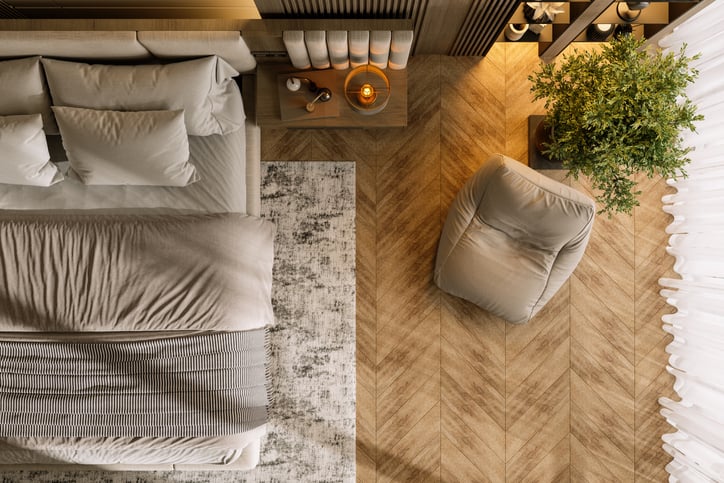
As we step into 2026, home design continues its evolution, moving beyond surface style toward spaces that support wellness, connection, and purposeful living. Instead of fleeting fads, many of the year’s biggest trends reflect how we want to live: with comfort, meaning, and resilience at the center.
From calming palettes to wellness-forward features, here’s what’s shaping homes in 2026 — and how you can bring these ideas into your own space.
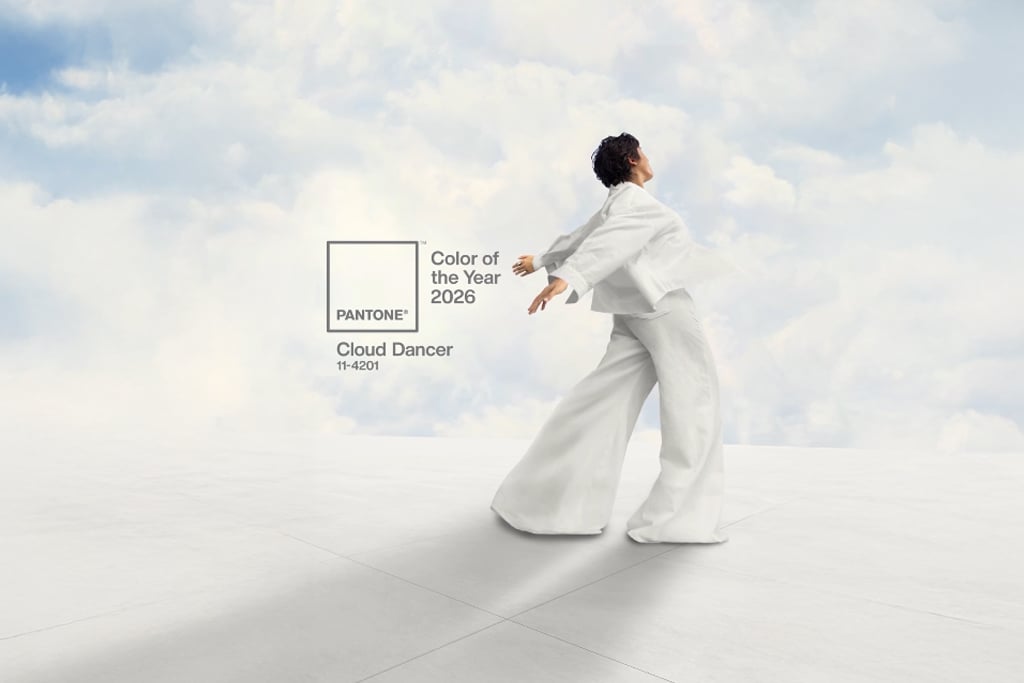
Image Source: Pantone
Soft Calm Comes First: Pantone’s Color of the Year — Cloud Dancer
Pantone made a thoughtful choice for Color of the Year 2026: Cloud Dancer, a soft, whisper-quiet shade of white designed to anchor interiors in a sense of calm rather than contrast.
As Mariam Davlashelidze, Senior Project Designer, explains:
“In a world saturated with visual noise, people are increasingly craving spaces that help them reset and reconnect with themselves. Cloud Dancer serves as a neutral foundation, inviting homeowners to rediscover their own palettes by mixing natural materials like wood, stone, and linen. Visual interest and individuality will come from layering different textures and statement accent pieces rather than relying on bold paint colors. In 2026 we will see a cultural shift toward intentional living, where design supports emotional balance and meaningful connections.”
- Mariam Davlashelidze, Senior Project Designer

Unlike the stark, gallery-style whites that dominated a decade ago, Cloud Dancer has a softer, more forgiving undertone. When used thoughtfully, it feels warm and restorative rather than cold or clinical, making it especially well-suited for kitchens, living spaces, and primary suites where comfort matters most.
Guiding principles for using Cloud Dancer well:
- Do: Pair it with warmer woods, natural stone, linen, and layered textures to create depth and warmth.
- Do: Let light and shadow play across textured surfaces—millwork, plaster, or tile—to keep spaces visually interesting.
- Don’t: Use it floor-to-ceiling with cool lighting and no texture, which can cause the space to feel sterile or flat.
When balanced with materiality and intention, Cloud Dancer becomes less about “white walls” and more about creating a calm foundation that allows a home’s character to shine.
In 2026 kitchens, we expect to see Cloud Dancer–style soft whites on walls or upper cabinetry, paired with warmer woods, stone, and curated color on islands, banquettes, or built-ins rather than full-color cabinetry runs.

Warm Neutrals & Earthy Palettes Take Hold
Alongside Cloud Dancer’s airy base, designers are embracing warmer, more organic neutrals and nature-inspired hues. Sandy beiges, creamy ivories, soft terracottas, and muted greens are showing up across kitchens, living spaces, and primary suites—grounding homes in warmth and familiarity.
Rather than feeling flat or minimalist, these palettes create interiors that feel layered, approachable, and lived-in. Visual interest comes from how colors are placed and paired, not from bold contrasts.
What this can look like in your home:
- In kitchens: Cloud Dancer walls paired with warm putty or mushroom-toned cabinetry for a soft, calming contrast.
- In living rooms: A neutral wall palette layered with an earthy area rug, terracotta or clay accents, and textured upholstery to add depth without visual noise.
- In bedrooms: Creamy neutrals mixed with linen bedding, wood nightstands, and subtle pattern for a restful, grounded feel.
The goal isn’t to make everything beige—it’s to create a backdrop that feels warm, cohesive, and easy to live with over time.
Wellness-Driven Design — From Spa Baths to Quiet Corners
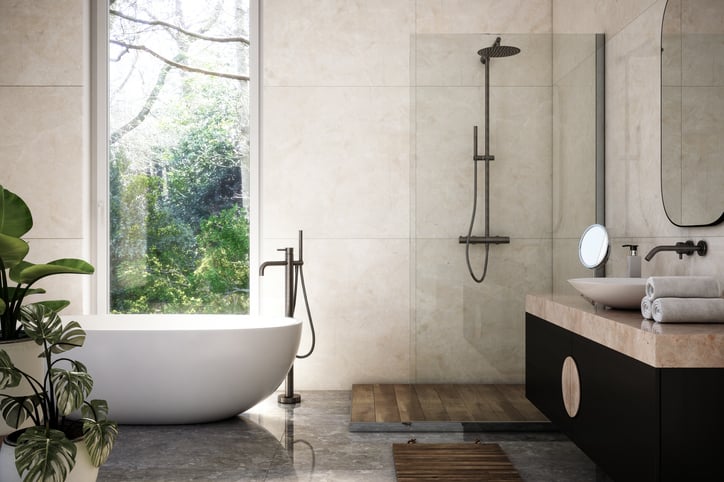
Wellness continues to shape how homes are designed in 2026. Spa-inspired bathrooms, movement spaces, and quiet retreats are no longer luxury extras—they’re becoming essential components of how people want to live.
This trend isn’t about adding square footage; it’s about carving out moments of calm within the home.
Simple ways homeowners are embracing wellness-driven design:
- In bathrooms: Choosing a curbless shower with a built-in bench, layered lighting (overhead, wall, and niche), and calming materials instead of just swapping fixtures.
- In overlooked spaces: Turning an awkward landing, wide hallway, or unused nook into a reading or meditation corner with a comfortable chair, wall sconce, and a plant.
- Throughout the home: Using lighting that shifts from bright and energizing during the day to soft and ambient in the evening to support natural rhythms.
These small, thoughtful choices align beautifully with the Cloud Dancer philosophy—spaces that restore rather than overstimulate.
We’re seeing wellness priorities drive bath remodels and primary suite reconfigurations — not just for spa appeal, but for daily stress reduction and long-term comfort.
Biophilic & Nature-Inspired Spaces
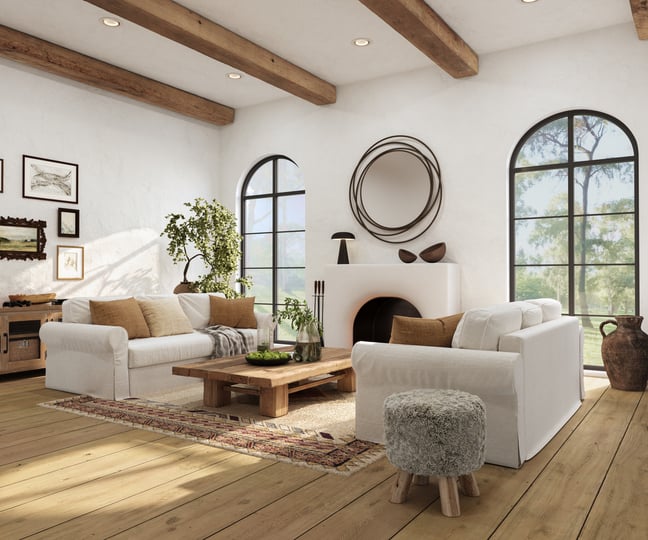
The desire to connect with nature continues to influence both layout and material choices. Biophilic design in 2026 goes beyond adding greenery—it’s about how light, views, and natural materials shape daily experience.
Ways this shows up in real homes:
- Maximizing daylight: Enlarging windows, adding transoms, or reworking layouts so natural light reaches deeper into the home.
- Material choices: Using wood beams, stone accents, or textured wall finishes that reference natural landscapes.
- Indoor-outdoor flow: Creating clearer connections to patios, decks, or gardens so living spaces feel visually and functionally extended.
These elements don’t just enhance aesthetics, they help homes feel calmer, brighter, and more grounded year-round.
In additions and bump-outs, new square footage is often planned specifically to capture light, views, and outdoor connection — creating rooms that feel restorative rather than purely functional.
Personalized, Flexible & Functional Spaces
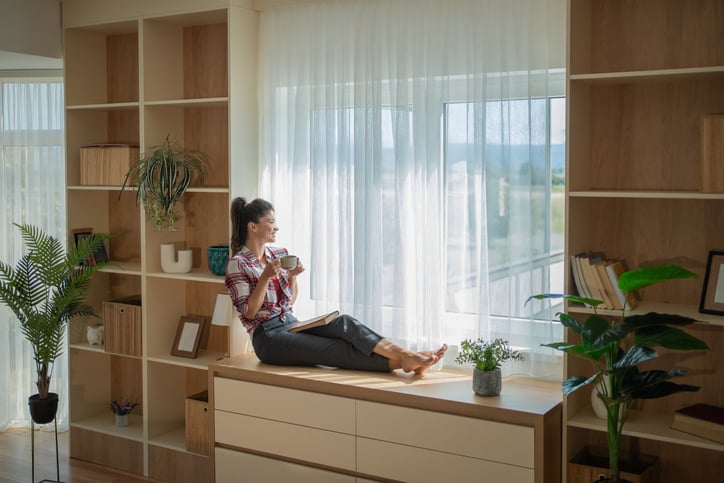
In 2026, design is moving away from one-size-fits-all rooms and toward spaces that adapt with life. Homeowners want homes that feel personal, flexible, and practical—without sacrificing beauty.
How flexibility is being built into modern homes:
- In basements: TV walls flanked by open space that can shift between playroom, Peloton zone, or guest sleeping area as needs change.
- In living spaces: Built-in window benches with hidden storage that double as seating, clutter control, and a quiet place to read.
- Throughout the home: Zones that can serve multiple purposes—home office by day, hobby space or guest room by night.
Open floor plans still matter, but so does the ability to define zones that evolve. The most successful homes balance openness with intention—spaces designed to grow alongside the people who live in them.
Whether through basement remodels or thoughtful additions, flexibility is becoming a top priority — designing rooms for how families live now and how they may live five or ten years from now.
Curves, Texture & Tactile Forms
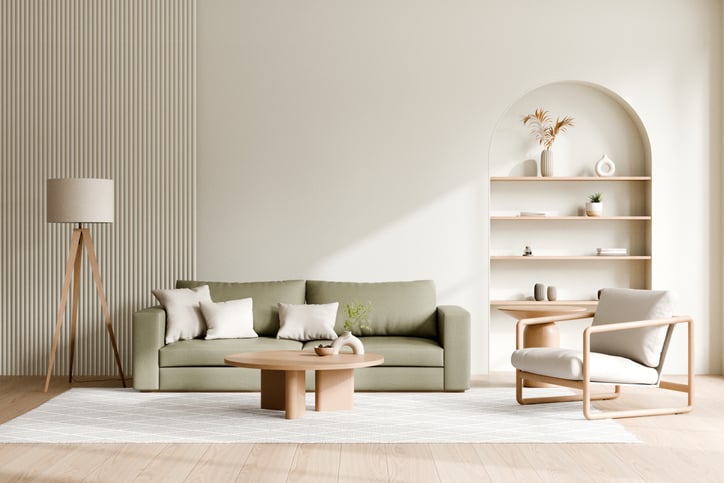
In 2026, interiors are softening, both visually and emotionally. Curved furniture, sculptural lighting, and organically shaped details are replacing sharp edges and rigid lines, creating spaces that feel more human and inviting.
This shift isn’t about making everything wavy or dramatic. Instead, it’s about subtle softness that balances the calm neutrals and restorative design principles defining the year.
Layered textures—think boucle upholstery, hand-thrown ceramics, plaster finishes, or hand-loomed rugs—add depth and sensory richness without overwhelming a space. These tactile elements bring warmth and individuality, especially when paired with quiet palettes like Cloud Dancer and warm neutrals.
A few guardrails to keep this trend timeless:
- A single curved element—like a rounded kitchen island, an arched doorway, or a soft-edge coffee table—can gently modernize a space without feeling trendy or risky.
- You don’t need every piece to be sculptural. One or two moments of softness go a long way.
- Choose texture selectively: a boucle accent chair, a plaster range hood, or a textured area rug can add interest without layering heavy texture on every surface.
When used intentionally, curves and texture soften a home in ways that feel welcoming and enduring; adding comfort and character without sacrificing longevity or livability.
Whether through basement remodels or thoughtful additions, flexibility is becoming a top priority; designing rooms for how families live now and how they may live five or ten years from now.
Bold Accent Moments & Personal Expression
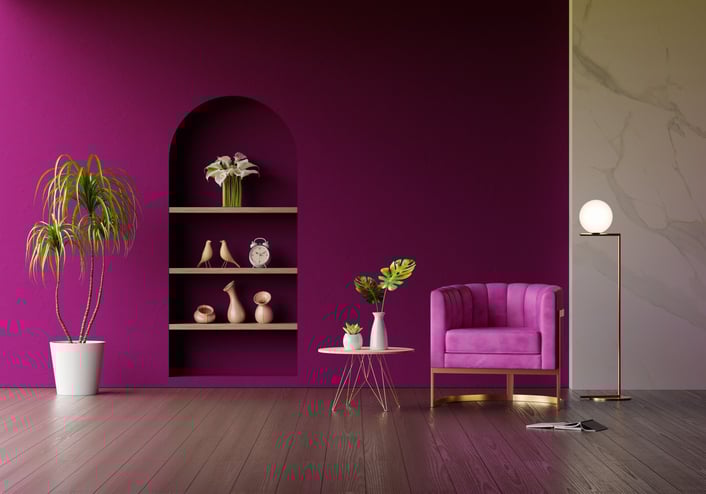
Despite the emphasis on calm neutrals, color isn’t disappearing; it’s becoming intentional. While Pantone’s Cloud Dancer sets a serene baseline, energetic “earthy vibrancy” palettes — rich ochres, olive greens, and deep plums — are emerging as accent drivers when used thoughtfully in décor, furniture, or feature walls.
Designers are also experimenting with color drenching, where a single hue envelops a room for an immersive, cohesive effect. This approach is often best used in smaller or secondary spaces like powder rooms, libraries, or dens, where a strong mood is welcome. In main living areas, homeowners can borrow the idea more subtly by drenching just one zone, or by choosing a softened, tonal version of the color to maintain depth without overwhelming the space.
Sustainable, Smart & Value-Driven Design
Homes in 2026 are increasingly designed with long-term health, comfort, and efficiency in mind. Beyond aesthetics, homeowners are thinking about how materials, systems, and layouts will support daily life for years to come.
From a sustainability standpoint, we’re seeing more clients ask for low-VOC paints and finishes, durable flooring that will still look good a decade from now, and cabinetry built to be repaired rather than replaced—choices that reduce waste and support healthier indoor environments.
Smart technology is also being integrated more intentionally, especially where it supports wellness. Interest is growing in circadian lighting controls that adjust throughout the day, smart ventilation and air-quality systems, and leak-detection technology that protects both the home and the homeowner’s long-term investment.
These features increasingly overlap with resale considerations as well. Upgrades like better mudroom storage, enhanced natural light, and accessible, spa-style showers are showing up in real estate conversations, not just design mood boards.
The takeaway is clear: in 2026, the most valued homes are those that balance beauty with purpose—spaces that feel good to live in today and remain comfortable, resilient, and relevant well into the future.
These conversations are happening not just in whole-home remodels, but in kitchens, baths, and additions where homeowners want choices that age well, both functionally and financially.
Trend Takeaway: Intentional Design Wins in 2026
The biggest theme for 2026 isn’t about chasing looks — it’s about shaping spaces that:
- Support how you actually live
- Enhance wellbeing and connection
- Feel calm, personal, and meaningful
- Balance neutrality with purposeful accents
From Cloud Dancer’s calming reset to layered materials, natural hues, and wellness-oriented spaces, the design landscape of 2026 points toward homes that support life—not just style.
If you’re planning a remodel in 2026, start by thinking about how you want your home to feel and function day to day. Use trends like these as tools to support that vision. When design decisions are guided by real life first, the result is a home that feels timeless, personal, and genuinely supportive long after the trends have passed.
That reinforces your philosophy: life first, trends second.
Ready to get started on your home remodeling project?
Schedule your virtual discovery session today: https://www.mossbuildinganddesign.com/contact-moss