

Every January, many homeowners set intentions for the year ahead: Eat better. Move more. Stress less. Spend more time together. Create better routines.
But by February, those resolutions often feel harder to keep—not because the goals were wrong, but because the environment didn’t support them.
Your home plays a powerful role in how habits form, how routines stick, and how easy (or difficult) it is to live the life you’re aiming for. Thoughtful home design can remove friction, create motivation, and make good intentions easier to act on—but it doesn’t replace the effort it takes to build new habits. Instead, it gives those habits a better chance to stick.
As we head into a new year, here are a few ways your home can actively support the goals you’ve set for yourself and your family.
Your Home, Your Habits: 5 Design Resolutions for a Better Year
Many homeowners don’t realize their space is working against them until they try to change their habits.
You might recognize these frustrations:
- Healthy cooking feels stressful because the kitchen is cramped or disorganized
- Workouts get skipped because equipment has to be set up and put away every time
- Meditation or yoga feels impossible without a quiet, dedicated space
- Family dinners happen less often because there’s nowhere to gather comfortably
- Work-from-home boundaries blur because there’s no true separation
When everything about your environment makes a habit harder—no counter space, no place to leave the yoga mat out, nowhere to sit together—it’s not surprising that willpower eventually loses. Design can take a lot of that resistance out of the equation.
It’s also important to note: not every solution requires an addition or a full renovation. Often, meaningful change comes from rethinking layout, improving storage, or carving out purpose-driven zones within the home you already have.
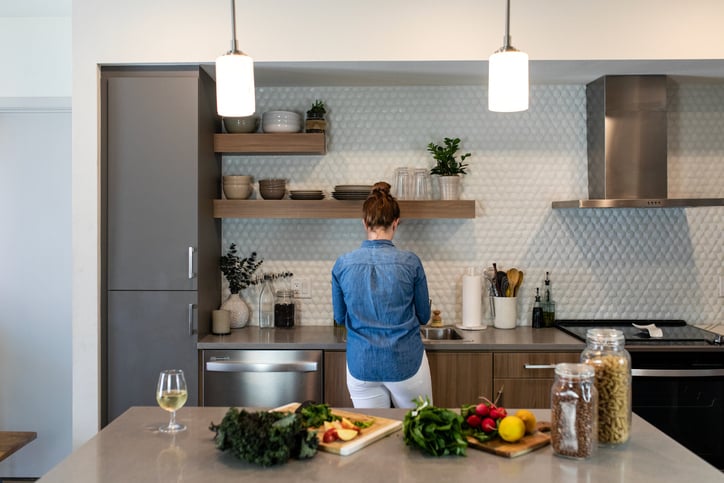
Resolution #1: Eat Better (and Enjoy It) | How Your Kitchen Can Help
A kitchen designed around how you actually cook makes healthy eating easier and more enjoyable. When counters are cluttered, the fridge blocks the prep area, or there’s nowhere to spread out ingredients, it’s easy to reach for takeout instead. But a kitchen with clear prep zones, accessible storage, and room to move invites you back into the routine of cooking meals that support your goals.
Smarter kitchen design can support better habits by:
- Placing a pull-out pantry or shallow storage near the fridge so healthy staples are visible and easy to grab—not buried in a dark cabinet
- Creating generous prep space near the sink, so washing and chopping feels effortless instead of cramped
- Adding a prep sink on the island, so one person can rinse and prep while another cooks at the range
- Organizing storage around how you cook—cutting boards, knives, and mixing bowls right where prep happens
- Designing clear zones that make cooking feel calm and efficient, even on busy weeknights
For many families, a reconfigured layout—or a modest kitchen bump-out—creates space for a larger island, better appliance spacing, and improved natural light. When cooking feels less chaotic, it becomes something you look forward to—not something you rush through—making it easier to stick with the healthy habits you set at the start of the year. The meals still require intention and effort, but the space no longer works against you.
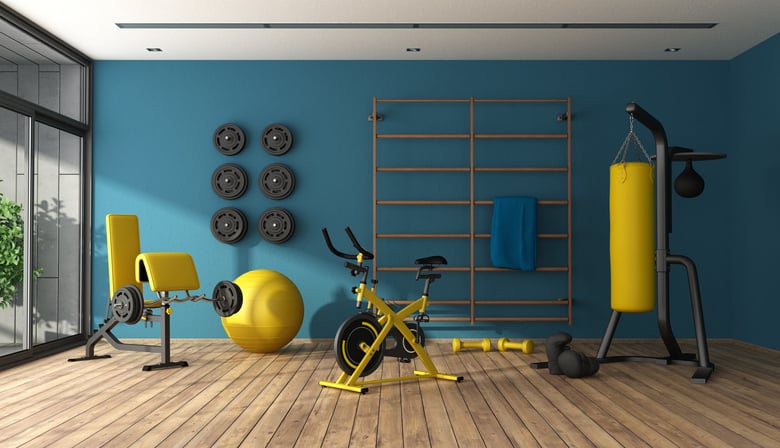
Resolution #2: Move More (Without Leaving the House) | Home Gyms & Movement Spaces
One of the biggest barriers to exercise is convenience. We’ve all had mornings where the alarm goes off early, workout clothes come out… and then reality sets in. The cold. The traffic. The crowded gym. Suddenly, skipping feels easier than starting.
A thoughtfully designed home gym or movement space can remove those obstacles and make consistency realistic. It can:
- Eliminate the time and friction of driving to a gym
- Make it easier to fit movement into busy mornings or evenings
- Support different routines—strength training, yoga, stretching, or cardio
This doesn’t always mean a full gym build-out. In many homes, underused basements, spare bedrooms, or bonus rooms can be reimagined into purposeful wellness spaces—without major construction. For many homeowners, the goal isn’t a magazine-worthy gym—it’s one well-designed corner that’s always ready.
Examples include:
- A corner of the basement outfitted with rubber flooring tiles, mirrors, and a wall-mounted rack for weights or resistance bands
- An awkward dormer nook or spare bedroom converted into a yoga or stretching zone, complete with a built-in bench and hidden storage for mats and props
- A flexible room that supports strength training today and can evolve into a meditation or mobility space later
Design details like ceiling height, flooring, ventilation, and sound control are what make the difference between a space you intend to use—and one that actually supports your resolutions all year long.
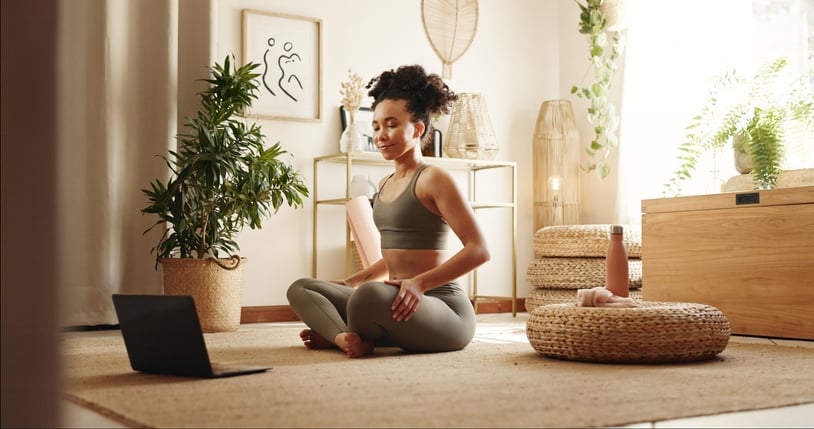
Resolution #3: Reduce Stress & Create Calm | Quiet Spaces Matter
In busy households, quiet space is often the hardest thing to come by. Between work calls, kids’ activities, TVs, and constant movement, even small moments of calm can feel elusive.
Designing for calm might look like:
- Swapping harsh overhead lighting for layered lighting and dimmers in a bedroom, so winding down at night actually feels restorative
- Adding solid-core doors and improved seals to a home office near the main living area to block everyday noise
- Converting a spare room or unused corner into a yoga or meditation space that’s visually and acoustically separated
- Creating a reading nook near a window—away from the kitchen or TV—where quiet feels intentional
Design can’t eliminate stress entirely, but it can reduce the constant background friction that makes stress harder to manage.
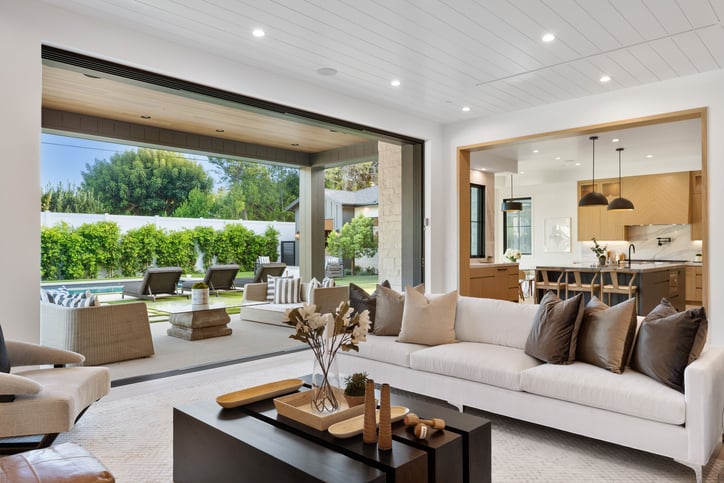
Resolution #4: Spend More Time Together | Designing for Connection
Many families picture spending more time together at home—but the reality often looks different. One person is cooking in a closed-off kitchen, someone else is at the dining table, kids are scattered in bedrooms, and conversations happen in passing instead of around a shared space.
Thoughtful design can gently pull people back into the same spaces, making everyday moments feel more connected without forcing them.
Design that encourages connection often includes:
- Kitchens that open into living or dining spaces
- Seating that invites conversation, not just TV viewing
- Clear flow between indoor and outdoor areas
- Spaces that support gathering without crowding
Spending more time together still requires intention—but when the layout supports it, connection happens more naturally instead of feeling forced.
Resolution #5: Build Better Daily Routines | Storage, Flow, and Function
Good habits thrive when your home supports them—but when countertops are always cluttered, junk drawers overflow, and there’s never a clear place to put things away, even the best intentions fall apart.
These simple improvements can help routines stick:
- Drop zones that prevent clutter buildup
- Mudrooms that streamline mornings
- Storage designed around how you live
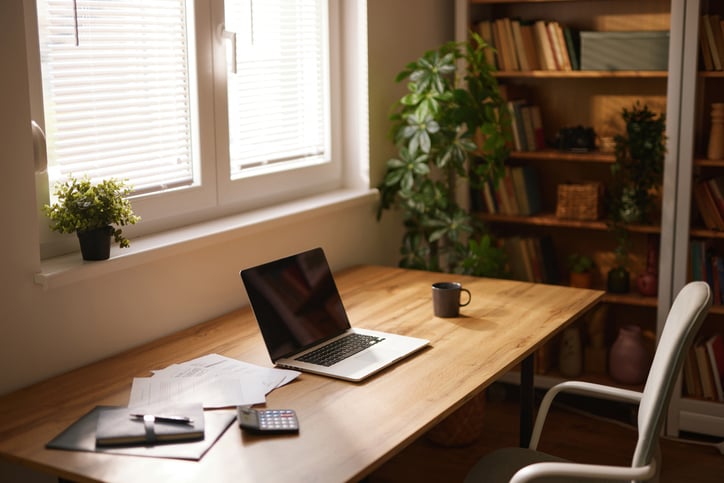
- Work-from-home spaces that separate “work” from “home”
When your home removes small daily stressors, you free up mental and physical energy to follow through on your goals—energy that can be spent building routines instead of fighting your environment.
Setting Yourself Up for Success With a Home That Supports Your Goals
Ask yourself:
- Do daily routines feel harder than they should—like juggling backpacks, coffee mugs, and breakfast with nowhere to set anything down?
- Are there spaces you avoid because they’re uncomfortable or inefficient, like a basement that feels dark and cold or a spare room that never quite works?
- Do good intentions fall apart because your home makes them inconvenient?
- Are you adapting your life to your house instead of the other way around?
If you answered “yes” to a few of these, design—not willpower—may be the missing piece.
It’s also worth saying: even the best-designed home won’t build habits for you. Design creates support, not discipline. The most successful changes happen when the space makes good choices easier—and you meet it halfway with consistency.
How MOSS Helps Homeowners Turn Intentions Into Reality
At MOSS, we don’t start with finishes—we start with how you want to live.
- Identify which goals matter most right now
- Understand whether layout changes or additions make sense
- Explore options that fit both lifestyle and budget
- Design spaces that support long-term habits, not short-term trends
Sometimes it’s a simple reconfiguration; other times it’s a larger change. Often, it’s about prioritizing one area that will make the biggest difference.
A Home That Supports the Year Ahead
New Year’s resolutions don’t have to fade by February. When your home is designed to support your routines, goals become easier to keep—and life feels more balanced and fulfilling.
If you’re thinking about how your home could better support the way you want to live in the year ahead, our team can help you explore what’s possible. We’ll start by understanding your current routines, where friction shows up in your day, and what goals matter most to you—then map out design options that align with both your lifestyle and your budget.
Because the best homes don’t just look good; they help you live better.
Ready to get started? Schedule your virtual discovery session today: https://www.mossbuildinganddesign.com/contact-moss