
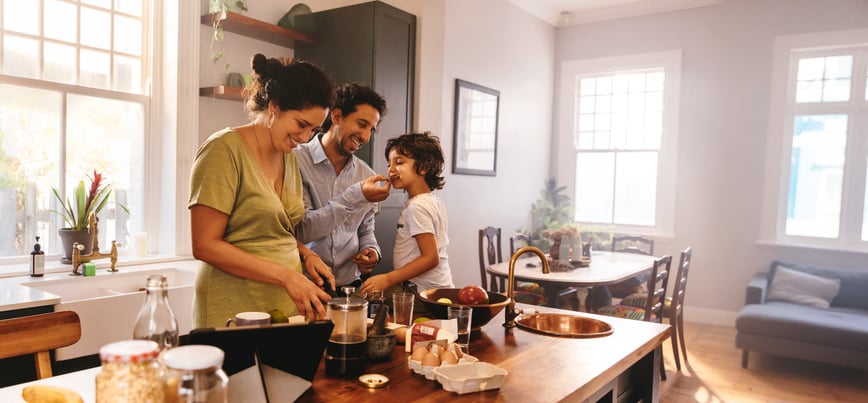
For many families, the kitchen is the heart of the home—where everyone gathers, cooks, talks, and reconnects after long days. But in older homes across Northern Virginia, Maryland, and D.C., kitchens are often cramped, boxed in, or cut off from the rest of the living space.
When homeowners reach the point where their kitchen no longer fits their life, they often assume the only solution is a major expansion or full-scale addition. But there’s a more efficient option that offers big impact with less complexity: the kitchen bump-out.
A kitchen bump-out adds square footage to create a more open, functional, and family-friendly space. It’s a small structural expansion with big possibilities.
At MOSS Building & Design, we help homeowners reimagine their kitchens in ways that honor their lifestyle, improve daily living, and stay within budget. Here’s what you need to know.
Why Homeowners Consider a Kitchen Bump-Out
Most families don’t wake up one morning wanting “more square footage.” They want the feeling of more space—room to move, gather, cook, and connect.
A bump-out can transform the feel and function of your kitchen even with a small footprint. Here are the upgrades homeowners often achieve:
- A Larger, More Functional Island
A bump-out often provides just enough space (up to 2 to 8 feet) to replace a cramped island with one that supports seating, prep, and storage.
- Improved Workflow & Circulation
With extra width, you can reconfigure appliances, improve traffic flow, and make cooking with multiple people possible.
- Space for a Breakfast Nook or Dining Area
Many families extend their bump-out to add a bench seating area, banquette, or sunlit dining space.
- More Natural Light
Expanding a kitchen wall opens opportunities for larger windows or sliding doors overlooking the yard.
- Additional Cabinetry & Storage
Even a few extra feet can create space for floor-to-ceiling cabinets or a pantry wall. - Better Connection to Outdoor Living
A bump-out can integrate the kitchen with a deck, patio, or backyard.

How a Kitchen Bump-Out Works
Every bump-out begins with a simple question: What problem are you trying to solve in your kitchen?
From there, MOSS guides homeowners through a clear, collaborative process:
Is a Kitchen Bump-Out Right for Your Home?
If you’re feeling constrained in your kitchen, but not ready for a full addition, a bump-out may be the perfect solution.
Ready to get started? Our Easy with MOSS process ensures a transparent, friendly, and simple start to your project. Here is how we accomplish that:
Step 1 — Discovery & Vision (30 minutes)
You and your Project Developer walk through challenges, goals, layout limitations, and options.
Step 2 — In-Home Evaluation (~1 hour)
We scan and assess your space, determine structural possibilities, and identify the simplest way to achieve your goals.
Step 3 — Solution-Focused Project Presentation (~1 hour)
Rather than a “finished design,” you receive thoughtful, achievable solutions tailored to your lifestyle, budget, and home’s structure.
Step 4 — Get Started with Confidence
Now that you have a feel for what to expect with your project, it's time to sign the contract. At this point, we'll collect a $2,500 deposit, which is fully refundable through your first design review meeting.
Step 5 — Design & Build Support
With an in-house team of Designers, Architects, Project Managers, and skilled Craftsmen, the bump-out is designed and built with communication and clarity at every step.
.png?width=1200&height=675&name=Version%201%20-%201200x675%20px%20(7).png)
If you’re wondering whether a bump-out is possible on your lot, the simplest next step is a quick virtual discovery session to talk through your layout, setbacks, and goals.
Schedule your virtual discovery session today: https://www.mossbuildinganddesign.com/contact-moss