
At some point, many homeowners reach the same crossroads.
It shows up in small, familiar moments: mornings where everyone is bumping into each other in the kitchen, evenings spent juggling work calls in makeshift spaces, or weekends where you realize there’s nowhere comfortable for everyone to gather. The house you once loved still has good bones—but it no longer supports the way your family lives today.
You know something needs to change. What’s less clear is how much change is needed to make your home truly work again.
Do you add more space?
Or do you rethink the space you already have?
An addition and a whole-house remodel can both be powerful solutions—but they solve different problems. Understanding which one aligns with your goals, lifestyle, and long-term plans is the key to making a smart investment in your home.
Here’s how to think through the decision with clarity and confidence.
When Your Home Starts to Feel Limiting
Most homeowners don’t wake up one day wanting a major remodel. The realization usually builds over time. You might notice things like:
- Rooms that technically “fit” everyone, but only if no one moves. Chairs get pulled from other rooms when guests arrive, and gatherings feel tight instead of relaxed.
- Storage that seems to vanish over time, leaving everyday items stacked on countertops, tucked under tables, or parked in corners because there’s nowhere logical to put them.
- Family members competing for the same spaces—two people trying to cook in the same narrow kitchen, kids doing homework where someone else needs to work, or one quiet call disrupting the whole house.
- Daily routines that take more effort than they should: morning traffic jams in hallways, backpacks and shoes piling up by the door, or evenings spent resetting spaces just to make them usable again.
- A home that no longer reflects how your family actually lives today, even if it once did because your needs, rhythms, and priorities have changed.
At that point, the question isn’t whether to change your home—it’s how.
Option 1: When an Addition Makes Sense
An addition focuses on adding square footage to solve a clear space shortage.
An Addition is Often Right if…
-
- Your home functions fairly well, but you’re consistently short on space
- You love your layout but need one more room—an extra bedroom, office, or family space—that simply doesn’t exist today
- Multi-generational living requires separate living zones for privacy and comfort
- You want to stay in your neighborhood, but the current footprint can’t support how your family lives
- Your lot, zoning, and setbacks allow for expansion
What an Addition Might Look Like:
-
- A new primary suite over the garage that frees up existing bedrooms for kids or guests—without overhauling the main floor layout
- A small rear addition off the kitchen that creates room for an island, a larger dining area, and better connection to the backyard
The Benefit of an Addition
You gain space without disrupting the entire home. For many families, that means:
-
- Less construction throughout the house
- Clear separation between existing spaces and new ones
- A targeted solution to a specific need
The Tradeoffs to Consider
Additions are more than “just adding a room”:
-
- New foundations, roofing, and exterior integration often make them a larger investment than homeowners initially expect
- Zoning, setbacks, and lot coverage can limit size or placement
- Connecting new structure to an older home can uncover issues like out-of-level floors or outdated framing
- If the existing layout is inefficient, more space alone may not fully solve daily frustrations
- If your home was built before 1978, renovations may involve lead-based paint. The EPA's Lead Renovation, Repair & Painting Program explains what homeowners need to know to keep projects safe.
Option 2: When a Whole-House Remodel Makes Sense
A whole-house remodel focuses on reworking how space functions, not just how much space you have.
A Whole-House Remodel is Often Right if…
-
- You technically have enough square footage, but it’s poorly organized
- Walls, hallways, or closed-off rooms interrupt flow and connection
- Multiple systems (electrical, plumbing, HVAC) need updating
- Your home feels dated or disconnected from how you live today
- You want a cohesive design throughout the home
A Common Scenario:
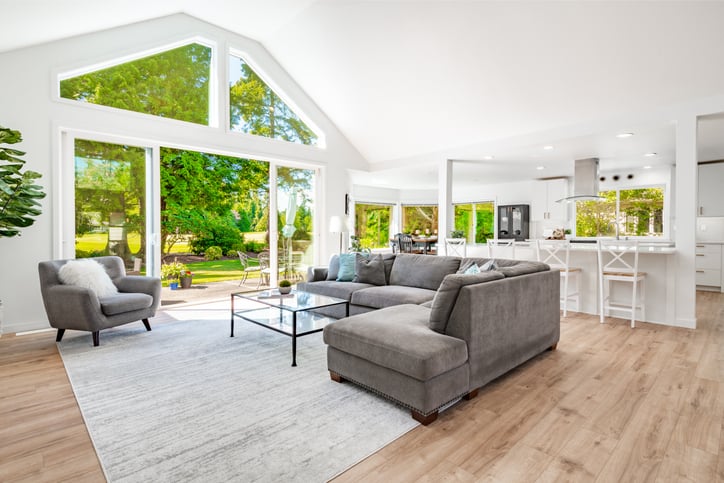
We often see older Colonials where the square footage is there—but it’s chopped into small, closed-off rooms. Reworking walls, openings, and circulation can make the same footprint feel dramatically larger, brighter, and more connected.
A whole-house remodel may include:
-
- Reconfiguring floor plans
- Opening kitchens and living spaces
- Improving storage and circulation
- Updating systems alongside finishes
- Whole-house remodels often include upgrades to HVAC, insulation, and windows. These improvements can qualify for rebates—check ENERGY STAR’s Federal Tax Credits for potential savings.
- Whole-house remodels often include upgrades to HVAC, insulation, and windows. These improvements can qualify for rebates—check ENERGY STAR’s Federal Tax Credits for potential savings.
The Benefit of a Whole-House Remodel
You’re not just fixing one problem—you’re aligning the entire home with your lifestyle.
Homeowners often notice:
-
- Better daily flow and fewer bottlenecks
- Stronger connection between rooms
- Spaces that finally reflect how the home is actually used
- A more unified, intentional feel throughout
A Note on Investment
Additions and whole-house remodels are both major investments. The goal isn’t to choose the “bigger” project—it’s to put that investment where it will have the biggest impact on how you live.
Additions can add valuable space but often come with higher structural and exterior costs
Whole-house remodels can sometimes deliver more functional improvement per dollar, but they require broader decision-making and short-term disruption
Choosing between the two is less about square footage—and more about solving the right problem.
Before you Start: Understand local rules and permits, which vary by jurisdiction. For example, Fairfax County zoning requirements, Montgomery County permit guidelines, and DC Department of Buildings outline what’s allowed for additions and remodels.
A Key Question: Is it a Space Problem or a Layout Problem?
This is often the deciding factor—and it’s not always obvious at first.
It’s Likely a Layout Issue if:
-
- You have rooms that sit mostly unused while other areas feel constantly crowded
- You can’t open appliances, doors, or drawers without blocking a main walkway
- Guests always end up clustered in one spot because the flow doesn’t make sense
- Daily routines overlap awkwardly—someone cooking blocks someone passing through
In these cases, homeowners often assume they need more space, when a reworked layout could dramatically improve how the home functions.
It’s Likely a Space Issue if:
-
- Even when every room is being used, you still don’t have enough bedrooms, bathrooms, or flexible living areas
- No matter how you rearrange furniture or rethink storage, someone is always without a workspace, sleeping space, or private area
- Multi-generational living or long-term guests require separation that the home simply can’t provide
- If you're planning for aging parents or long-term accessibility, the NAHB Aging-in-Place Remodeling Checklist offers practical design considerations
In those situations, no amount of rearranging will fully solve the problem—additional square footage may be necessary.
Sometimes, the Best Answer is Both
For some homes—especially older properties or growing families—the right solution combines both approaches:
- A modest addition paired with a reworked interior layout
- A kitchen bump-out alongside a first-floor reconfiguration
- Added square footage that also improves circulation and flow
These hybrid solutions often deliver the biggest impact—but only when thoughtfully planned around how the home is actually used.
A Quick Self-Check: Which Path Might be Right for You?
You may lean toward an addition if:
-
- You generally like your home’s layout, but need one or two specific spaces
- The issue is quantity (bedrooms, offices, living areas), not how rooms connect
- Your lot and zoning allow for expansion
You may lean toward a whole-house remodel if:
-
- Daily movement feels inefficient or awkward
- You’re constantly working around tight clearances or dead zones
- Storage and circulation are ongoing frustrations
- Multiple rooms need updating anyway
If you checked boxes in both columns, a combined approach may be worth exploring—pairing targeted square footage with a smarter, more functional layout.
How MOSS Helps Homeowners Decide with Confidence
At MOSS, we don’t start with assumptions—we start with listening.
We help homeowners:
- Understand how their home is being used today
- Identify whether space, layout, or both are the root issue
- Evaluate feasibility, budget range, and tradeoffs early
- Explore options that align with long-term plans—not just immediate fixes
Sometimes that means confirming an addition is the right move. Other times, it means showing how much potential already exists within the home’s footprint. In a typical initial visit, we’ll walk your home with you, listen to what’s working and what isn’t, talk through whether your challenges are more about space, layout, or both, and outline several paths—addition, reconfiguration, or a combination—along with rough budget ranges.
Choosing the Right Path for the Life You’re Building
Both additions and whole-house remodels can transform how a home feels—but the right choice depends on how you live, gather, and plan for the future.
If you’re weighing your options and wondering which path makes the most sense for your home, our team can walk your space with you, identify where the real constraints are, and help you understand which approach will deliver the most meaningful change.
Because the best remodel isn’t about doing more—it’s about doing what fits your life best.
Ready to get started? Schedule your virtual discovery session today: https://www.mossbuildinganddesign.com/contact-moss