
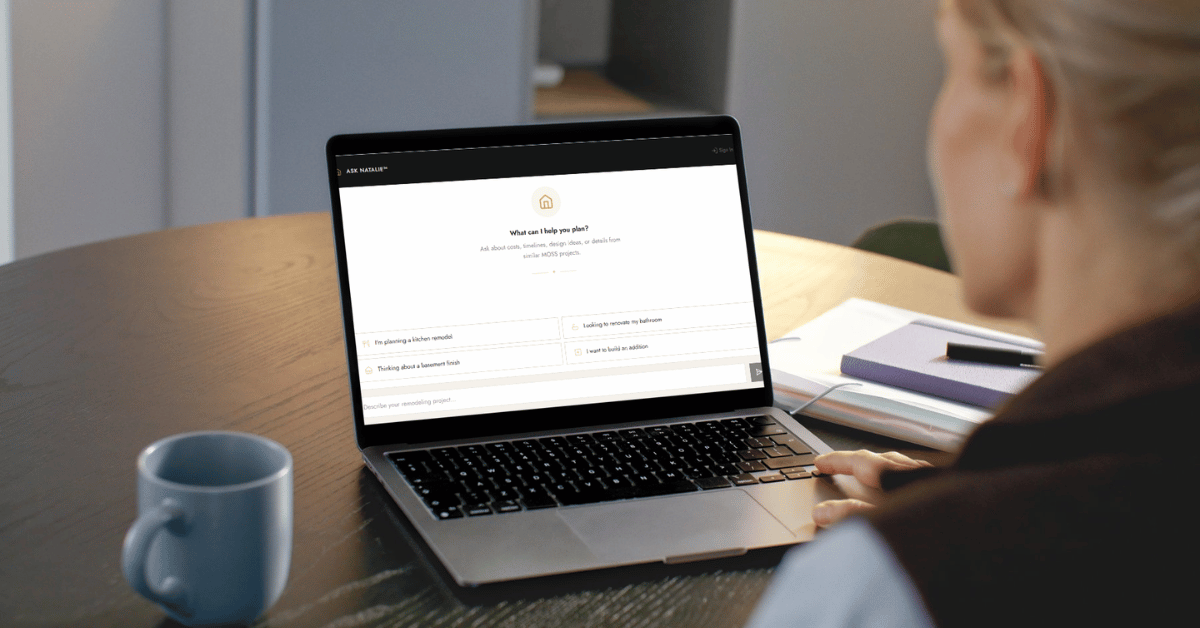
For most homeowners, the decision to remodel is an emotional feeling that starts as they realize that their home no longer works the way it used to. It could be a crowded kitchen, a realization that there is no dedicated area to take work calls, or maybe the house just no longer makes them feel as comfortable as when they first moved in.
The next step is opening the laptop and searching:
“Kitchen remodel cost.”
“Home addition ideas.”
“Finished basement inspiration.”
And within a few minutes, they are inundated with inspirational photos, articles, and advice that looks great but doesn’t answer the question:
“What would this actually look like in my home?”
That’s where most people start to feel overwhelmed. There is a wealth of information on the internet, but there is no way to collate all of that information into a concise picture for their own specific home.
Why Early Research Matters More Than You Think
It’s easy to assume that research is just something you do before talking to a remodeling company. However, good research up front is what makes a remodel feel doable instead of overwhelming. The more clearly you understand what’s not working in your home, the easier it is to make decisions later. By having a clear understanding of the layout, budget, scope of work, and timeline, theremodel becomes more grounded, and less like there’s a million disconnected ideas.
At the same time, early research doesn’t need to be perfect. The project can continue to evolve as the remodel progresses. It is not all on the homeowner to create a fully fleshed out plan. Your job is to notice what’s not working and explore ideas. Tools like Natalie, later our design team, help turn that into a real plan.
Start With Problems, Not Solutions
One of the biggest reasons remodeling research feels overwhelming is that most people start in the wrong place.
They start with solutions instead of first thinking about what problems they are currently experiencing in their homes.
Instead of starting with Pinterest photos of beautiful kitchens, articles that lay out all the current design trends, and picking out finishes and fixtures before any work is done, start with questions like:
- Where does your day feel inefficient?
- Where do routines break down?
- Where does the house feel too small, too closed off, or just hard to use?
- “How do homeowners expand a 1990s kitchen without adding square footage?”
- “What does a two-story addition look like on a colonial home?”
- “What’s typically included in a basement remodel?”
Once these questions are fully answered, the solutions that are found online tend to become much easier to visualize in the home.
Understand Scope Before You Worry About Details
Another common pain point for homeowners is worrying about specifics of the project before understanding the scope of the remodel. While cabinet styles, countertop materials, and appliances are important to the functionality and aesthetics of the remodel, fully understanding the scope of the work must come first. For some families, that might mean a main-level reconfiguration instead of a full addition. For others, it might be a phased approach that starts with the kitchen and entry.
Use the Right Tools to Narrow the Field
Part of what makes early research difficult is that most online information is broad and generic. Inspirational photos and lists may pull from houses all over the country and not take into account the unique opportunities and challenges that Northern Virginia, Washington, DC, and Montgomery County, Maryland provide.
That’s where having access to the right kind of information makes a difference. Tools like Natalie were created for exactly this stage of the process. Instead of searching the entire internet, Natalie connects you to real MOSS projects completed right here in the DC, Northern Virginia, and Montgomery County area. With over 7,000 projects to pull from, Natalie can provide information on every type of remodel.
You can ask specific questions like:
- “How do homeowners expand a 1990s kitchen without adding square footage?”
- “What does a two-story addition look like on a colonial home?”
- “What’s typically included in a basement remodel?”
Within a few prompts, you’re seeing how real homeowners in the area approached similar challenges, what changes were made, and how those spaces function now. And because you can create an account and return to your conversations, you don’t have to figure everything out at once. You can explore at your own pace and come back when new questions come up.
Get in Touch
By marrying early research with a clear understanding of what is and what isn’t working in the home, homeowners already eliminate a lot of the stress that comes with undergoing a remodeling project. In addition, by adding smart tools like Natalie into the mix, homeowners can see legitimate comparisons to their own space.
By the time you’re ready to talk with our team, you’re not starting from a blank page. You’ve already explored real, local remodels with Natalie and clarified what matters most in your home.
If you're ready to see what's possible for your home, schedule a virtual discovery session to start the conversation: https://www.mossbuildinganddesign.com/contact-moss or start your remodeling research with Natalie, our AI-powered assistant built on real MOSS projects: https://natalie.mossbuildinganddesign.com/natalie