
4 Trends Shaping Residential Architecture
in the DC Metro Area
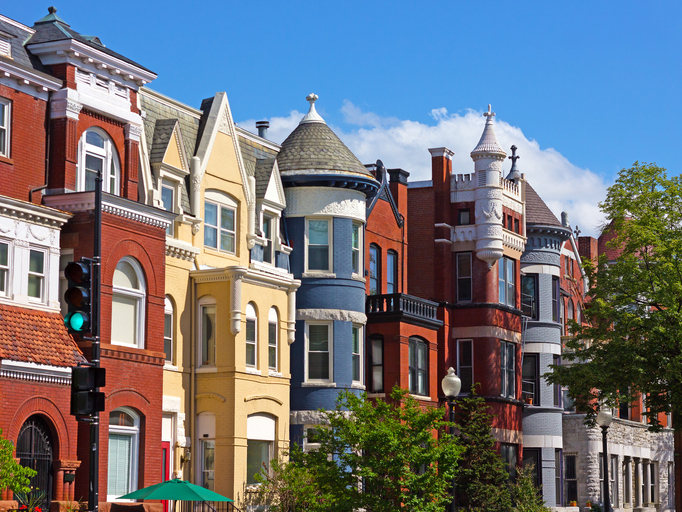
Residential architecture in the Washington DC metro area is shaped by a constant balance between preservation and change. Across neighborhoods in Northwest DC, Arlington, Alexandria, and Chevy Chase, homeowners are working within a strong architectural framework that includes rowhouses, early 20th-century foursquares, and classic brick colonials. These homes carry a clear identity, both individually and as part of a larger streetscape, where façade discipline and fenestration rhythm play a critical role in how blocks are perceived.
At the same time, expectations for how a home should function have evolved. Layouts now need to support remote work, informal gathering, and daily flexibility in ways older homes were never designed to accommodate. Rather than replacing what exists, most projects focus on adapting these homes with a series of intentional architectural moves.
1. Rear Additions That Preserve the Street Presence
One of the most consistent architectural approaches in the DC metro area is preserving the front of the home while allowing the rear to evolve. In neighborhoods with strong visual continuity or historic oversight, the street-facing façade is maintained with care. Brick detailing, window alignment, and rooflines remain consistent so the home continues to fit within the rhythm of the block.
The transformation happens at the back, where there is more flexibility to rethink space and light. Rear additions often introduce larger spans of glass, simplified roof forms, and a more contemporary material palette. In many cases, these additions extend across the full width of the home, creating a stronger connection to the yard.
For example, in a Petworth rowhouse, a two-story rear addition might take on a simple, box-like form with large glass openings, while the front façade remains unchanged to preserve the character of the street.
Common design moves include:
- Two-story rear additions that expand both kitchen and bedroom levels
- Full-width glass openings that replace smaller punched windows
- Flatter or shed-style rooflines to maximize ceiling height and daylight
This contrast between front and back allows the home to evolve without disrupting the surrounding context.
2. Structural Openings That Redefine Interior Space
Older homes in the DC area were designed around separation. Kitchens were enclosed, dining rooms were formal, and circulation moved through a series of smaller rooms. Today, those layouts are being reworked through targeted structural openings rather than full removal of structure.
Load-bearing walls are replaced with engineered beams or steel supports that allow for wider, more intentional connections. The goal is not just openness, but clarity in how spaces relate to one another.
These changes typically focus on:
- Extending sightlines from the front of the home to the rear
- Repositioning kitchens to act as central anchors
- Simplifying circulation paths so movement feels more intuitive
In an Arlington colonial, for example, removing a central wall and introducing a concealed beam can create a continuous line of sight from the entry through to the backyard, while still maintaining the home’s original proportions.
Vertical space is often reconsidered as well. Vaulted ceilings, partial double-height areas, and skylights help bring natural light deeper into the home, especially in rowhouses or tighter lots where side windows are limited.
3. Integrated Indoor–Outdoor Architecture
Outdoor space in the DC metro area is often limited, but its role has expanded significantly. Rather than being treated as separate, outdoor areas are now designed as extensions of interior living spaces.
This shift is most visible in the use of large-format openings. Multi-panel sliding or folding door systems, often spanning 10 to 16 feet, allow entire sections of the rear wall to open. When paired with aligned floor levels, the transition between inside and outside becomes seamless.
Several architectural details reinforce this connection:
- Continuous flooring or complementary materials that visually link spaces
- Covered terraces or roof overhangs that extend usable square footage
- Outdoor zones positioned directly off kitchens or living areas for daily use
In Chevy Chase homes, this often shows up as a kitchen that opens directly onto a covered terrace, creating a natural extension of the main living space that works for both everyday use and larger gatherings.
4. Programmed Flex Spaces Within the Home
As daily life becomes more layered, residential architecture in the DC area is shifting toward spaces that are both purposeful and adaptable. Rather than oversized rooms with a single function, homeowners are prioritizing spaces that support multiple uses without feeling undefined.
This has led to a more intentional approach to programming. Offices are designed with attention to light, acoustics, and privacy, often positioned away from main living areas. Secondary spaces are planned to shift between uses as needed.
Common examples include:
- Secondary living areas that function as media rooms, study spaces, or quiet retreats
- Guest suites designed for longer-term or multigenerational use
- Mudrooms and transition zones that manage daily movement and storage
These spaces are not necessarily larger, but they are more deliberate in how they are used.
Architecture That Balances Context and Change
Residential architecture in Washington DC is shaped by constraints that are specific to the region, from historic districts to lot sizes to established neighborhood patterns. The most successful projects respond directly to those conditions, preserving what gives a home its identity while introducing changes that improve how it performs.
In many cases, the most impactful decisions are not the most visible ones, but the ones that reshape how space is used day to day. A rowhouse with a reimagined rear addition. A colonial with a kitchen that opens fully to the backyard. A home that looks familiar from the street but functions entirely differently once you step inside.
That balance continues to define how homes in the DC metro area evolve over time.
Get in Touch
If you're ready to see what's possible for your home, schedule a virtual discovery session to start the conversation: https://www.mossbuildinganddesign.com/contact-moss or start your remodeling research with Natalie, our AI-powered assistant built on real MOSS projects: https://natalie.mossbuildinganddesign.com/natalie
Recent Posts
Home Renovation Questions Answered | Natalie by MOSS
If you’ve spent any time on our website, you may have already met Natalie. She’s MOSS’s AI-powered...
Timeless Home Design Features That Never Go Out of Style in DC, MD & VA
Every year brings a new wave of design trends. A color becomes popular. A particular cabinet style...
Small Spaces with Big Impact | Home Remodeling in DC, MD, and VA
When homeowners begin planning a remodel, the conversation usually starts around the spaces they...