
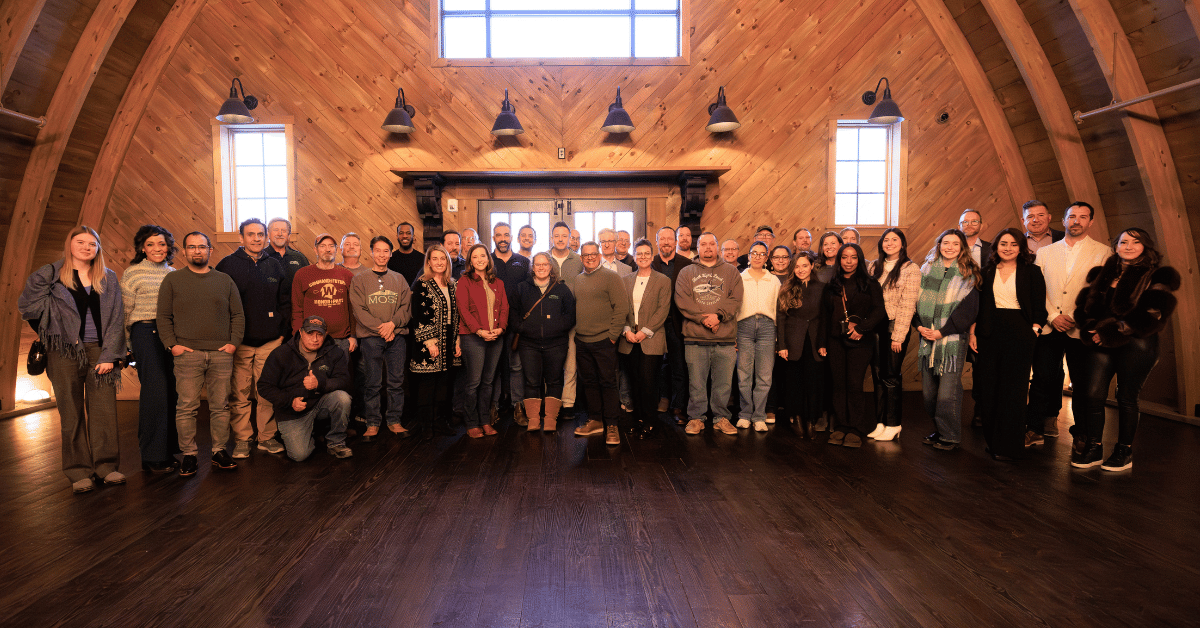
Twenty-five years is a long time in any business. Since MOSS was founded in 2001, we've helped thousands of homeowners throughout Northern Virginia, Maryland, and Washington, DC transform the way they live in their homes. During that time, design trends have evolved, technology has changed nearly every aspect of the remodeling process, and homeowners have more access to inspiration than ever before. Yet despite all of those changes, the fundamentals of a successful remodeling project remain remarkably consistent.
As we celebrate our 25th anniversary, we asked members of our leadership team to reflect on the lessons they've learned over the years. Their perspectives come from decades of combined experience guiding homeowners through some of life's biggest investments and most personal projects.
While every project is unique, a few themes emerged again and again: trust matters more than most people realize, preparation is everything, and remodeling has always been about people first.
Remodeling Is About More Than Construction
One of the biggest lessons we've learned over the past 25 years is that remodeling is never just about the physical space. Homeowners often come to us because they want a larger kitchen, a better primary suite, or an addition that gives their family more room to grow. But behind every project is a deeper reason. A family is preparing for a new chapter. Retirees want to stay in the home they love. Parents need spaces that function better for everyday life. Those personal motivations are what make remodeling different from many other industries.
"Customer projects are very personal to them," says Dave Greksouk, Executive Vice President. "Any project can have a really profound impact on families. Treating every homeowner with regard for their home is incredibly important because it's one of the most intimate places in their lives."
That perspective has influenced how we approach every phase of the process. Technical expertise, craftsmanship, and project management are all critical, but they only tell part of the story. Successful remodeling requires listening, understanding priorities, and never forgetting that every project affects real people and real lives.
As Dave puts it, remodeling is ultimately a people-centered business. Whether you're working with homeowners, trade partners, designers, architects, or craftsmen, success depends on collaboration and relationships.
Homeowners Often Underestimate What Happens Before Construction Starts
One thing that hasn't changed over the years is how often homeowners underestimate the amount of planning required before construction can begin. With social media providing endless inspiration, it's easy to focus on the exciting parts of a remodel: selecting materials, imagining layouts, and dreaming about the finished space. What many homeowners don't see is the extensive planning that makes those transformations possible.
"They underestimate how many decisions there really are, and how those decisions stack on top of each other," says Kristen Corbett, Director of Architecture & Design. "It's not just picking finishes. It's understanding how each selection impacts budget, schedule, and construction."
A kitchen remodel, for example, may involve hundreds of interconnected decisions. Cabinet configurations affect appliance placement. Appliance selections influence electrical requirements. Lighting plans interact with ceiling details. Every choice creates a ripple effect throughout the project.
The good news is that homeowners don't have to navigate those decisions alone. After 25 years of remodeling, we've developed a process designed to guide clients through each step, helping them understand options, evaluate tradeoffs, and make informed decisions with confidence. Our role is to manage the complexity behind the scenes so homeowners can focus on the outcomes that matter most to them.
Over the years, we've also invested heavily in helping homeowners visualize and experience their projects before construction begins. One example is MOSS 360, our immersive visualization process that allows homeowners to "walk through" their future space before a single wall is built.
CEO Paul DesRoches II recalls one of the earliest MOSS 360 projects involving homeowners who were quite tall and concerned about whether standard countertop heights would work for their family. Through the virtual model, they were able to experience the kitchen, test layouts, and even evaluate details like the placement of cookware and everyday tasks before construction started.
"The goal is to help homeowners experience the project before we build it," says Paul. "When clients can see and feel the space in advance, they gain confidence in their decisions and avoid surprises later."
-1.png?width=1200&height=628&name=25%20years%20(2)-1.png)
Trust Is the Foundation of Every Successful Project
After twenty-five years and thousands of completed projects, one lesson stands above almost all others: the best remodeling experiences are built on trust. No project is completely free of challenges. Homes can reveal hidden conditions once walls are opened. Clients may reconsider a decision. Material lead times can change unexpectedly. Those realities are part of remodeling. What determines whether those moments become major frustrations or manageable conversations is the strength of the relationship between homeowner and project team.
For many homeowners, this can be reassuring to hear. The goal isn't to eliminate every unknown. The goal is to have the right team in place when those unknowns arise.
The Best Projects Start with Alignment
When asked what separates a smooth project from a stressful one, Kristen immediately pointed to alignment.
Over the years, we've seen this play out repeatedly.
Projects tend to run more efficiently when homeowners have a clear understanding of what they want to accomplish, what their budget can realistically support, and what tradeoffs they are willing—or unwilling—to make. When everyone begins with the same expectations, decision-making becomes easier and communication becomes stronger. That's one of the reasons integrated design-build has become such an important part of our process. Bringing designers, architects, project managers, and construction professionals together from the beginning creates clarity that benefits everyone involved.
Experience also teaches us that seemingly small decisions can have a cascading effect throughout a project. A layout adjustment, a fixture change, or a late-stage design revision may appear simple on the surface, but can impact multiple aspects of the project behind the scenes.
That's why alignment early in the process is so important. The more decisions can be evaluated, visualized, and finalized before construction begins, the more predictable and enjoyable the remodeling experience becomes.
Social Media Isn't Showing the Whole Story
Today's homeowners are more informed than ever before, but they're also exposed to more unrealistic expectations than ever before. Platforms like Instagram, Pinterest, and TikTok showcase stunning transformations, but they often leave out the months of planning, coordination, permitting, budgeting, and problem-solving that made those projects possible.
"Projects are often portrayed as quicker, easier, and more linear than they actually are," says Kristen.
The reality is that great remodeling takes time. Successful projects require detailed planning, experienced professionals, and homeowners who are willing to invest in the process before they ever see the final result. That's not a flaw in remodeling. It's simply the nature of creating something that is custom-built around how a family lives.
Don't Compromise the Vision You Really Want
Perhaps the most timeless advice from our leadership team came when Dave was asked what homeowners should know before starting a project.
Paul shares a similar perspective.
That doesn't mean every project should be bigger. It means every project should be intentional. In many cases, the most memorable spaces aren't defined by square footage or budget. They're defined by thoughtful details that reflect the homeowner's personality. A handcrafted fixture, a custom furniture piece, or a unique design element can become the feature that makes a home feel distinctly theirs.
Understanding what matters most and investing accordingly often leads to greater long-term satisfaction than making decisions based solely on short-term savings.
.png?width=1200&height=628&name=25%20years%20(2).png)
Looking Back—and Looking Ahead
Twenty-five years of remodeling has reinforced something that probably won't change in the next twenty-five. The most successful projects aren't necessarily the largest, most complex, or most expensive.
That's a lesson we've carried with us since 2001, and it's one we'll continue to build on in the years ahead. As we celebrate this milestone anniversary, we're incredibly grateful to the homeowners who have trusted us with their homes, the team members who have shaped our culture, and the communities we've been fortunate to serve. The industry will continue to evolve. Trends will change. Technology will advance.
At MOSS, we're committed to continuing that evolution. From immersive visualization tools like MOSS 360 to new applications of AI and technology, we're constantly looking for ways to bring more transparency, confidence, and value to the remodeling process.